
Jackson Hill Update
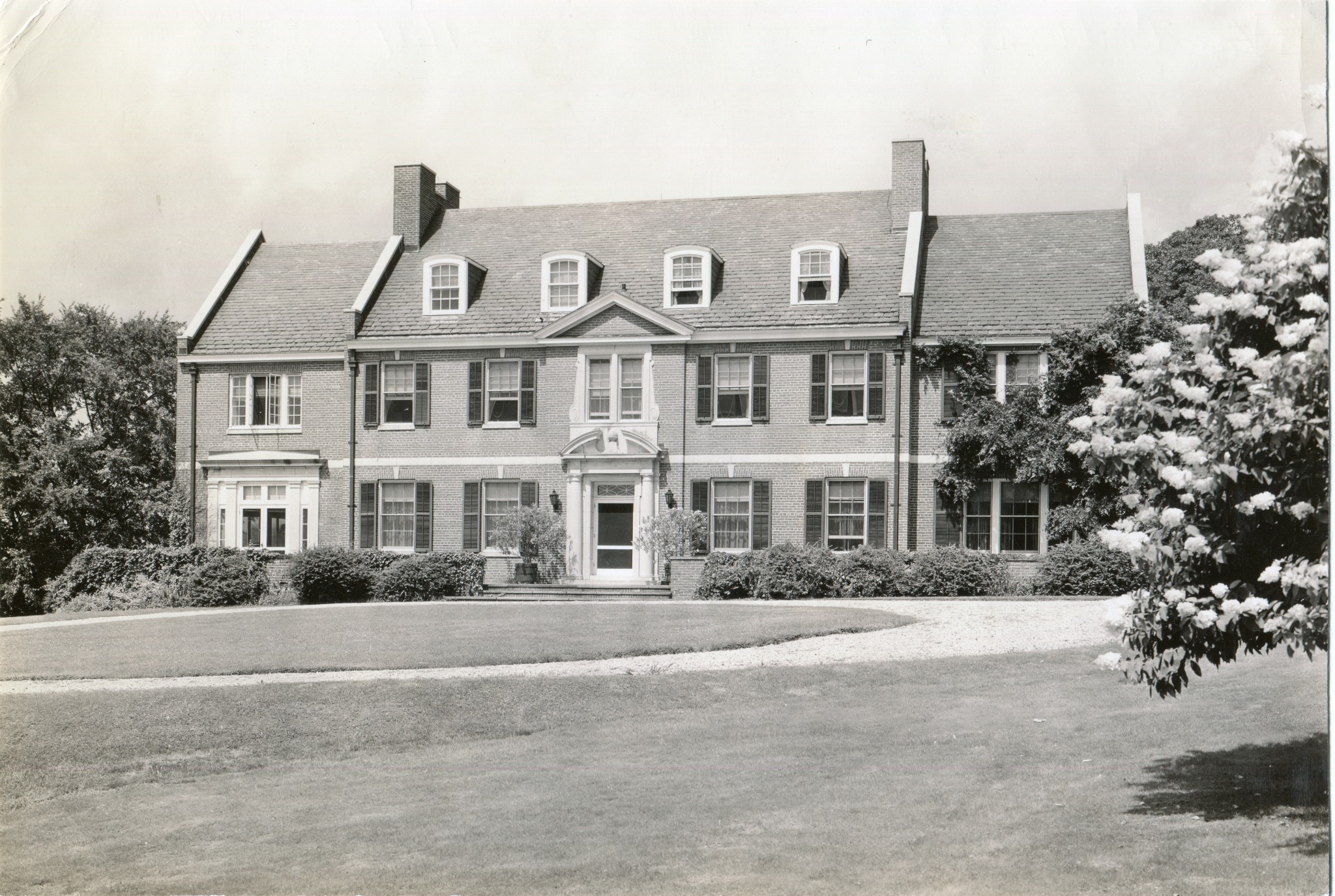
I have spent nearly a year of my life living inside the world of this big, old, beautiful brick house. I became intimately acquainted with the contours of the 42.67 acres of land underneath her; charmed by her chipping plaster and crumbling ceilings; oddly captivated by the musky scent of overwhelming neglect. She occupied far more headspace than I should have allowed, day and (late) night, but such is the siren call of faded grandeur—it longs to return to its aesthetic equilibrium. Sadly, she needed help we could not give her. She was sold yesterday to another buyer.
It was a struggle from the start. There were countless hours spent tweaking the numbers and rejiggering our concept to reconcile the (absurd) renovation cost with the reality of its business potential. Still more time wrestling with the inherent formality of the space, at odds with the free-flowing creative spirit of our vision. But I loved it all, in every moment. I loved the history. I loved the land. I loved the bones, literal and figurative. It was all so rich.
The site is not without its own struggles. The original house—a soaring Adirondack-styled Victorian built by the Van Cortlandt family in the late 19th century—burned to the ground on October 29, 1929. A defective flue was blamed. Though the house was completely destroyed, nearly everything inside was “saved by quick work of persons near.” One wonders if the townsfolk would be so helpful today.
Augustus Van Cortlandt rebuilt on the exact same footprint, completing the current brick Georgian structure in 1932. It too was nearly destroyed by fire on September 8, 1966. This time, a disgruntled maid was suspected of arson, and rumored to have disappeared from town several days later. The Lakeville Journal provided hard-hitting reporting on the matter: “one of the most unhappy homecomings was that experienced by Mr. (William) Smith, who returned from Martha’s Vineyard, with the family’s children, on Thursday afternoon as his home was burning.”
Her history is checkered from there. She was briefly a convent (the nuns revived her burned out second floor), then later an old folks home. For much of the past 15 years, she has faced all manner of obstacles, enduring a bitter, on-and-off development feud, the details of which are not important. She has been, in essence, in a state of suspended existence. Just waiting. In the end, like many dream projects that meet their demise, the math was simple: too much time, too much money.
Churchill said, “first we shape our buildings, and thereafter our buildings shape us.” And while I never lived there, or took a single swing of a sledgehammer to begin demolition for her badly needed renovation, I shaped her prospective future with numerous trips to the town hall, historical society, and P&Z office, countless sketches, secret Pinterest boards, elaborate site plans, and, of course, intense readings of the State of Connecticut’s “Technical Standards for Subsurface Sewage Disposal Systems.” Only recently did it become clear that she had shaped me, too. For in the course of trying to give something old new life, you are forced to define a raison d’être for this new existence. And, in order to do that, you must reflect inward on the meaning of your own. Why exactly are you doing this? I’m not saying I have all the answers, only that I went to the lighthouse.
Today is bittersweet, but we will forge a new path in another place. I am grateful that the new owners apparently intend to pursue a full and faithful historical renovation. I wish them all luck and good stewardship.
I hope she thrives.
← Back to Harkness Farm